EPC
Energy Performance Certificate (EPC) in London & Birmingham
If you are selling, renting, or leasing a property in the UK, you are legally required to obtain a valid Energy Performance Certificate (EPC).
An EPC provides a clear rating of how energy efficient a building is and identifies ways to improve its performance. The rating scale runs from A (most efficient) to G (least efficient).
We provide professional EPC assessments across London and Birmingham, supporting homeowners, landlords, estate agents, property developers and commercial property owners with fast, compliant certification
Our EPC inspections follow UK legislation and recognised energy assessment methodologies used across the property sector.
EPC Regulations and Legal Requirements in the UK
Energy efficiency certification in the UK is governed by several important regulations.
Energy Performance of Buildings Regulations 2012
These regulations require property owners to obtain an EPC when selling, renting or constructing buildings.
Certificates must be produced by accredited energy assessors and lodged on the national EPC database.
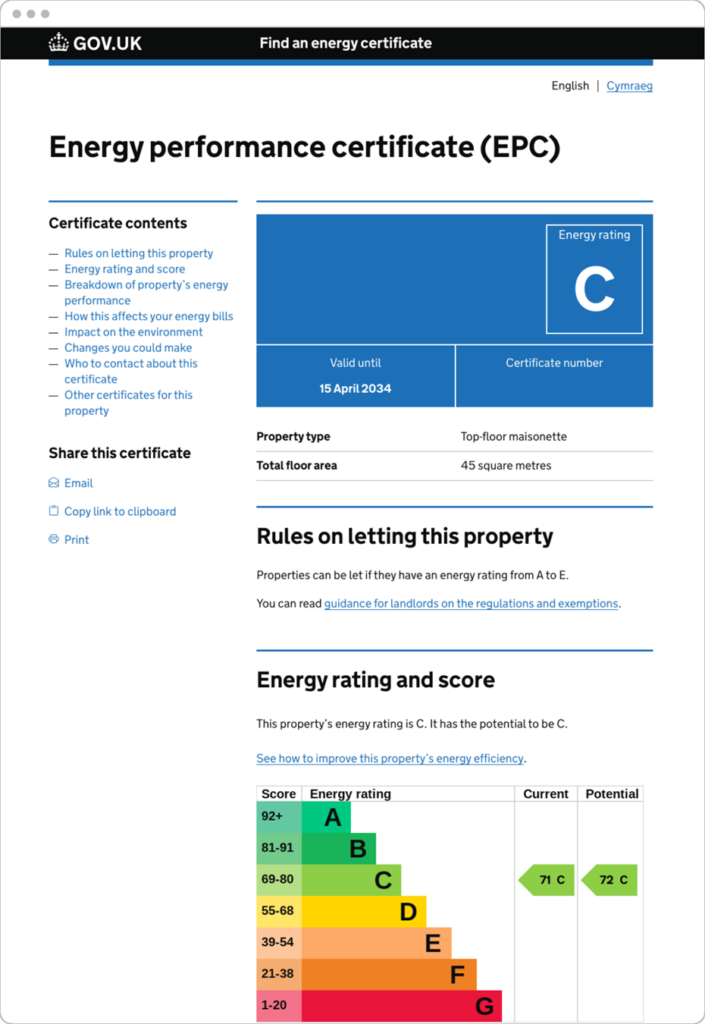
What Is an Energy Performance Certificate?
An Energy Performance Certificate evaluates the energy efficiency of a property and estimates its running costs.
The EPC report includes:
- Current energy efficiency rating (A–G)
- Potential energy efficiency rating after improvements
- Estimated energy costs for heating and lighting
- Carbon emissions produced by the building
- Practical recommendations to improve efficiency
Once issued, the certificate remains valid for 10 years and must be registered on the UK Government EPC Register
When Do You Need an EPC?
You must obtain an EPC if you are:
- Selling a property
- Renting out a property
- Constructing a new building
- Converting or significantly renovating a building
- Marketing a property for sale or rent
The certificate must be available before the property is advertised.
Estate agents and landlords who fail to provide an EPC may face financial penalties from local authorities.
Domestic EPC Surveys
Domestic EPC assessments apply to residential properties including:
- Houses
- Flats and apartments
- HMOs
- Residential conversions
During the inspection, the assessor reviews:
- Heating and hot water systems
- Loft and wall insulation
- Window glazing
- Lighting systems
- Property construction type
- Renewable technologies (solar panels, heat pumps)
The information is then processed using the SAP calculation method to produce the EPC rating.
Minimum Energy Efficiency Standards (MEES)
Under the Energy Efficiency (Private Rented Property) Regulations 2015, landlords must ensure rental properties meet minimum efficiency standards.
Currently:
• Rental properties must achieve minimum EPC rating E
Properties below this rating cannot legally be rented unless an exemption has been registered.


Commercial EPC Assessments
Commercial EPCs apply to buildings such as:
• Retail shops
• Offices
• Restaurants and cafes
• Warehouses
• Industrial units
• Public buildings
These assessments evaluate:
• HVAC systems
• Lighting efficiency
• Building fabric insulation
• Ventilation systems
Commercial EPC ratings are calculated using the SBEM methodology.
Future EPC Targets (Net Zero Strategy)
The UK Government plans to tighten efficiency rules to support climate targets.
Expected changes include:
• EPC rating C for new tenancies by 2028
• EPC rating C for all rental properties by 2030
Landlords should begin improving energy efficiency now to avoid future compliance issues.
Standards and Assessment Methods Used in EPC Surveys
Energy assessments follow nationally recognised methodologies including:
- SAP (Standard Assessment Procedure) – used for residential properties
- SBEM (Simplified Building Energy Model) – used for commercial buildings
- Approved Document L – Conservation of Fuel and Power
- PAS 2035 – Retrofit framework for improving energy efficiency
These standards ensure EPC ratings are calculated consistently across the UK.
EPC Surveys for Landlords and Property Investors
For landlords in London and Birmingham, EPC compliance is particularly important due to stricter enforcement by local councils.
Failure to meet minimum efficiency standards may lead to:
• Fines up to £5,000 per property
• Inability to legally rent the property
• Enforcement notices from local authorities
An EPC survey helps landlords identify improvements required to remain compliant with MEES regulations.
Why Choose Our EPC Assessment Service
- Fast turnaround certificates
- Government accredited energy assessors
- Competitive pricing for landlords and agents
- Domestic and commercial EPC surveys
- Full compliance with UK EPC regulations
We aim to make the process straightforward while ensuring properties meet legal energy efficiency requirements.
Areas We Cover
We provide EPC assessments across Greater London and Birmingham.
London Boroughs
Barking and Dagenham
Newham
Redbridge
Tower Hamlets
Hackney
Greenwich
Lewisham
Croydon
Southwark
Waltham Forest
Birmingham Areas
Edgbaston
Selly Oak
Handsworth
Harborne
Moseley
Kings Heath
Digbeth
Birmingham City Centre
FAQs
How much does an EPC cost in London?
Domestic EPC assessments typically range between £60 and £120, depending on the property size and location.
How long is an EPC certificate valid?
An EPC remains valid for 10 years unless major structural changes are made.
Can I sell a property without an EPC?
No. It is illegal to market a property for sale or rent without a valid EPC.
Who can issue an EPC?
Only a government accredited Domestic Energy Assessor (DEA) or Commercial Energy Assessor (CEA) can produce an EPC.
Where can I check an existing EPC certificate?
All EPC certificates are available on the UK Government EPC Register.
Domestic EPC assessments typically range between £60 and £120, depending on the property size and location.
An EPC remains valid for 10 years unless major structural changes are made.
No. It is illegal to market a property for sale or rent without a valid EPC.
Only a government accredited Domestic Energy Assessor (DEA) or Commercial Energy Assessor (CEA) can produce an EPC.
All EPC certificates are available on the UK Government EPC Register.
How long does an EPC inspection take?
Most inspections take 30–45 minutes for an average residential property.
What happens if my property has EPC rating F or G?
Landlords cannot legally rent properties with rating F or G unless improvements are made or an exemption is registered.
What improvements can increase my EPC rating?
Common improvements include:
• Loft insulation
• Wall insulation
• Energy-efficient boilers
• Double glazing
• LED lighting
• Solar panels
Do landlords need a new EPC for every tenant?
No. The EPC is valid for 10 years, so it can be reused unless it expires.
Can improving insulation really reduce energy bills?
Yes. Upgrading insulation can significantly reduce heat loss and lower heating costs by 20–30% in many properties.
Most inspections take 30–45 minutes for an average residential property.
Landlords cannot legally rent properties with rating F or G unless improvements are made or an exemption is registered.
Common improvements include:
• Loft insulation
• Wall insulation
• Energy-efficient boilers
• Double glazing
• LED lighting
• Solar panels
No. The EPC is valid for 10 years, so it can be reused unless it expires.
Yes. Upgrading insulation can significantly reduce heat loss and lower heating costs by 20–30% in many properties.